

เริ่มต้น
สร้างรายได้
การลงทุนที่อยู่ใกล้แค่ปลายนิ้วของคุณ
Investizo LTD. Business company number 25432 BC 2019
Suite 305, Griffith Corporate Centre,
P.O. Box 1510, Beachmont, Kingstown,
St. Vincent and the Grenadines
DUNS 817053497
Phone:+996312610515
E-mail: [email protected]
© 2019-2026 Investizo 18+ สงวนลิขสิทธิ์ทั้งหมด
คำเตือนความเสี่ยง: สัญญาซื้อขายส่วนต่าง (CFDs) เป็นผลิตภัณฑ์ทางการเงินที่มีความซับซ้อนและมีการซื้อขายด้วยระบบมาร์จิ้น การเทรด CFDs มีความเสี่ยงสูงและอาจไม่เหมาะสำหรับนักลงทุนทุกประเภท กรุณาศึกษาและทำความเข้าใจความเสี่ยงที่เกี่ยวข้องอย่างรอบคอบ เนื่องจากคุณอาจสูญเสียเงินลงทุนทั้งหมดของคุณได้
© 2019-2026 Investizo 18+ สงวนลิขสิทธิ์ทั้งหมด
คำเตือนความเสี่ยง: สัญญาซื้อขายส่วนต่าง (CFDs) เป็นผลิตภัณฑ์ทางการเงินที่มีความซับซ้อนและมีการซื้อขายด้วยระบบมาร์จิ้น การเทรด CFDs มีความเสี่ยงสูงและอาจไม่เหมาะสำหรับนักลงทุนทุกประเภท กรุณาศึกษาและทำความเข้าใจความเสี่ยงที่เกี่ยวข้องอย่างรอบคอบ เนื่องจากคุณอาจสูญเสียเงินลงทุนทั้งหมดของคุณได้
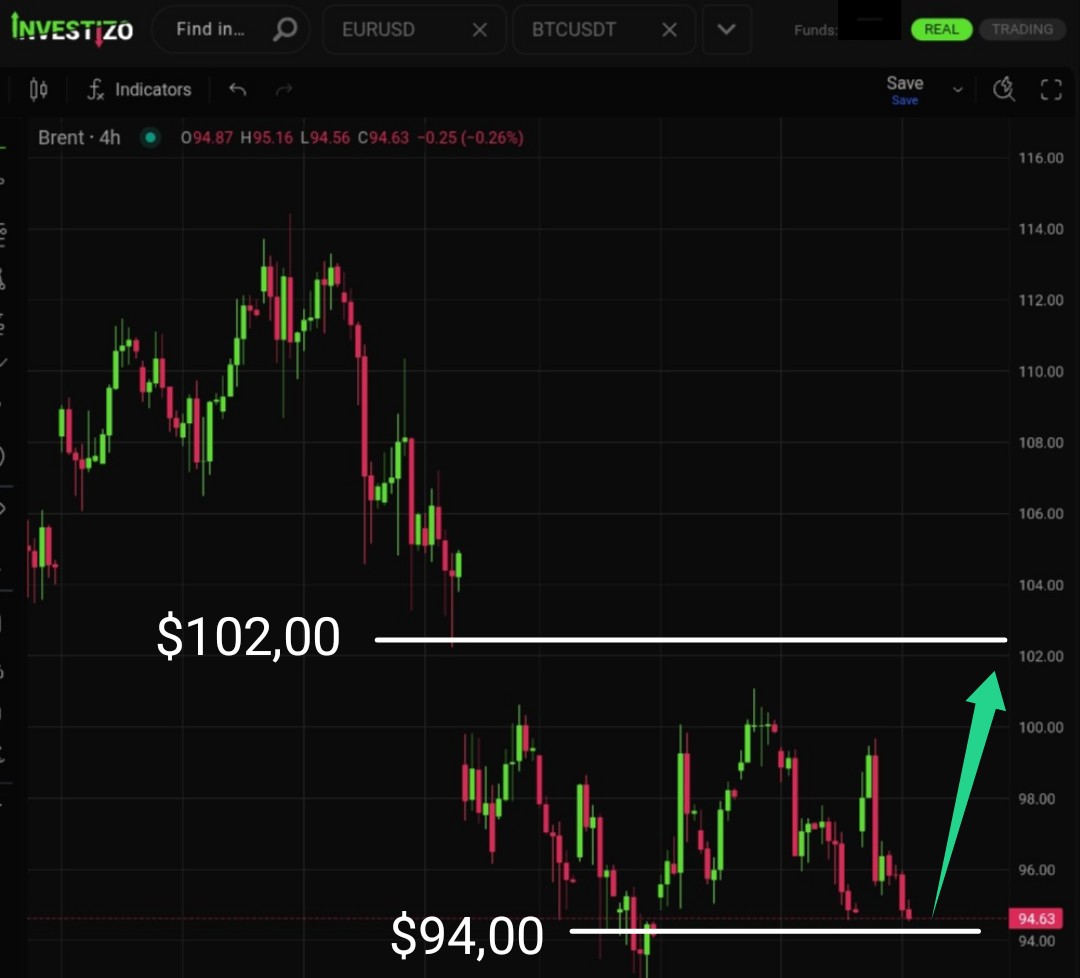
The global crude benchmark is exhibiting an unexpected counter-trend retracement, completely decoupling from overnight geopolitical headlines to favor a stark macroeconomic reality check. Brent crude is currently trading lower at $94.63 per barrel, wiping out yesterday's early session momentum and shifting immediate focus to a critical near-term structural floor at $94.00. Despite the intraday selling pressure, long-term technical desks are closely monitoring an un-filled upside price gap lingering in the $102.00 zone – a structural anomaly that historically exerts a magnetic pull on price action once the spot market stabilizes and works through localized inventory imbalances.
The primary catalyst forcing Brent to surrender its geopolitical premium is a profound structural slowdown in physical crude consumption across major Asian economic hubs. Official customs data confirms that Chinese crude imports have cratered to an 8-year low, as domestic refining margins buckle under the weight of sustained global inflationary pressures and localized economic deceleration. Beijing’s retreat from the seaborne market has been heavily capitalized on by New Delhi; latest port tracking data shows India aggressively increasing its intake of Russian Urals crude, taking advantage of wider, steep discounts that shield the world's third-largest oil consumer from Western spot market spikes. This reallocation of discounted barrels has effectively blunted the immediate impact of Middle Eastern supply anxieties, leaving the market temporarily oversupplied with physical prompt-month crude.
However, the downside remains firmly insulated by a massive, tightening supply backdrop across Western storage hubs that is expected to arrest the current decline. Preliminary institutional consensus data released ahead of Wednesday's official energy reports flags an aggressive, counter-seasonal draw of over 3.8 million barrels in U.S. commercial crude inventories, driven by a sharp acceleration in domestic refinery utilization ahead of peak summer driving demand. This tightening is compounded by prolonged pipeline export closures in Iraqi Kurdistan, keeping 450,000 barrels per day offline, alongside strict compliance reiterations from OPEC+ ministers.
Market Outlook: The path of least resistance for Brent crude is transitioning into a broader consolidation phase, with the immediate bias leaning toward a retest of the $94.00 support level. While near-term demand destruction out of China continues to anchor prices, the structural reality of shrinking Western inventories makes this intraday dip highly attractive to value buyers.
Traders should view the current consolidation as a base-building phase, keeping the broader, historical target of the $102.00 upside gap firmly in play once the market shifts its focus back to the physical supply deficits projected for the second half of the month.